



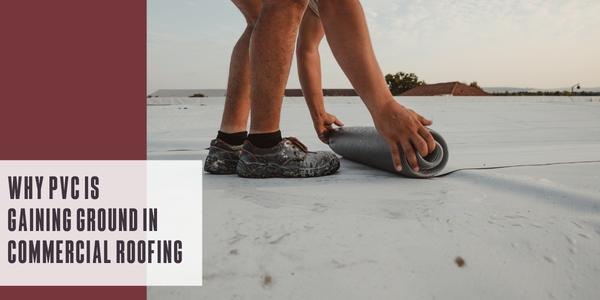
Why PVC is gaining ground in commercial roofing
By Jesse Sanchez.
A closer look at how durability, chemical resistance and long-term performance are shaping contractor decisions.
Contractors are reevaluating what defines long-term performance as commercial roofing systems face increasing expectations for building usage, environmental exposure and long-term costs, Materials are no longer judged primarily on upfront cost or ease of installation, but on how reliably they perform under evolving conditions. Within that shift, polyvinyl chloride (PVC) roofing membranes are gaining momentum for their ability to combine installation familiarity with long-term resilience.
That momentum is rooted in recent changes in how risk is understood. Roofing systems are exposed not only to weather, but to the environments that develop and evolve around them over time. In this episode of Roofing Road Trips®, Jamie Treglio of IB Roof Systems™, noted how nearby developments, from restaurants to industrial operations, can introduce chemical exposure to your building that might accelerate membrane deterioration. PVC’s resistance to those chemicals positions it as a system designed not just for current conditions, but for the unknown variables that emerge over decades.
From there, performance considerations extend beyond chemical exposure into overall building protection. PVC membranes offer inherent fire resistance, including self-extinguishing properties that can help limit damage when a flame source is removed. As Jamie explained, “it is going to put itself out once the flame source is removed,” a characteristic that reinforces its value in high-risk environments. In environments such as data centers or buildings incorporating rooftop solar, where risk tolerance is low and continuity is critical, that added layer of protection becomes a defining advantage rather than a secondary benefit.
Even with those performance gains, installation remains straightforward. PVC systems follow the same general application methods as other single-ply membranes, allowing contractors to integrate them into existing workflows without disruption. Jamie shared, “it's still going down the same way that TPO goes down, right? So they do a lot of TPO jobs and then they come over and PVC feels the same for the install, but they're getting these added benefits,” noting that crews can realize added performance benefits without introducing new complexity on the jobsite.
Ultimately, the rise of PVC reflects a growing emphasis on lifecycle value. Building owners are increasingly planning for longer hold periods, placing greater importance on systems that can perform for 35 years or more with proper maintenance. As Jamie noted, “We need to start thinking long-term here,” a shift that represents how durability, resistance and consistency are no longer differentiators, but requirements.
For contractors, this shift signals more than a change in material preference. It points to a more strategic approach to roofing, one that prioritizes long-term performance, reduces uncertainty and supports sustained relationships through service and maintenance over time.
Learn more about IB Roof Systems in their Coffee Shop Directory or visit www.ibroof.com.
About the author

Jesse is a writer for The Coffee Shops. When he is not writing and learning about the roofing industry, he can be found powerlifting, playing saxophone or reading a good book.
Recommended For You
Fall seminar brings roofing research into focus
Read More ...
The power of empathy in building customer connections
Read More ...
Roofing Road Trips with Heidi Welcome Owens Corning’s Brian King
Read More ...
UP TO THE MINUTE




Comments
Leave a Reply
Have an account? Login to leave a comment!
Sign In