UP TO THE MINUTE





Why invest in algae-resistant shingles

By Lori Jerome, PABCO Roofing Products.
Help homeowners retain their roof’s new appearance by investing in PABCO’s Algae Defender shingles.
No one wants to see black streaks of algae on their rooftop. Unfortunately, that’s a common complaint among homeowners. The good news is that this is not usually a sign of structural failure; algae buildup can simply cause a darker appearance in wet or shady areas of a rooftop.
Even still, they are quite unsightly, which can lead to dissatisfied homeowners, lowered curb appeal and unnecessary insurance claims (as it can make a roof look older than it is). So, how do you help your clients avoid this issue?
One solution is offering PABCO Roofing Products ' Algae Defender shingles, which provide a reliable way to avoid algae development on the roof, even in the most moisture-prone regions.
Understanding algae on the roof
The dark streaks that appear on a roof are usually caused by a blue-green algae called cyanobacteria. This organism thrives in areas where moisture lingers on a roof surface, especially on north-facing slopes or in shaded areas near trees or buildings, particularly in climates with prolonged periods of wet conditions.
The algae itself isn’t structurally harmful to the shingles. The issue is what happens after it dies. As cyanobacteria break down, they leave behind a dark, pigmented residue that clings to the shingles. Over time, this develops into the familiar black streaking pattern that gives roofs a worn or neglected appearance. Algae-resistant shingles are designed to prevent the growth of blue-green algae and the unsightly black streaks they leave behind.
Where is algae most common
While algae can grow almost anywhere, some environments make blue-green algae far more aggressive. Contractors should strongly recommend algae-resistant shingles for roofs that experience:
- Long periods of moisture (coastal regions, fog belts, rainy climates)
- Slow dry-out times (cool temperatures, persistent cloud cover)
- North-facing slopes that rarely receive sunlight
- Tree cover or nearby structures that cast long shadows
- Neighborhoods with heavy debris, pollen or dust that feed on organic growth
- Rural areas where farm activity stirs up dirt that settles on the roof
In places like the Pacific Northwest, for example, a roof might stay wet for months at a time. Without algae-resistant shingles, black streaks are almost guaranteed.
PABCO® Roofing Products’ science-backed solution
 Because PABCO Roofing Products is based in Tacoma, Washington, one of the most algae-prone regions in North America, we’ve invested heavily in understanding how algae develops and exactly how much copper is needed to resist it.
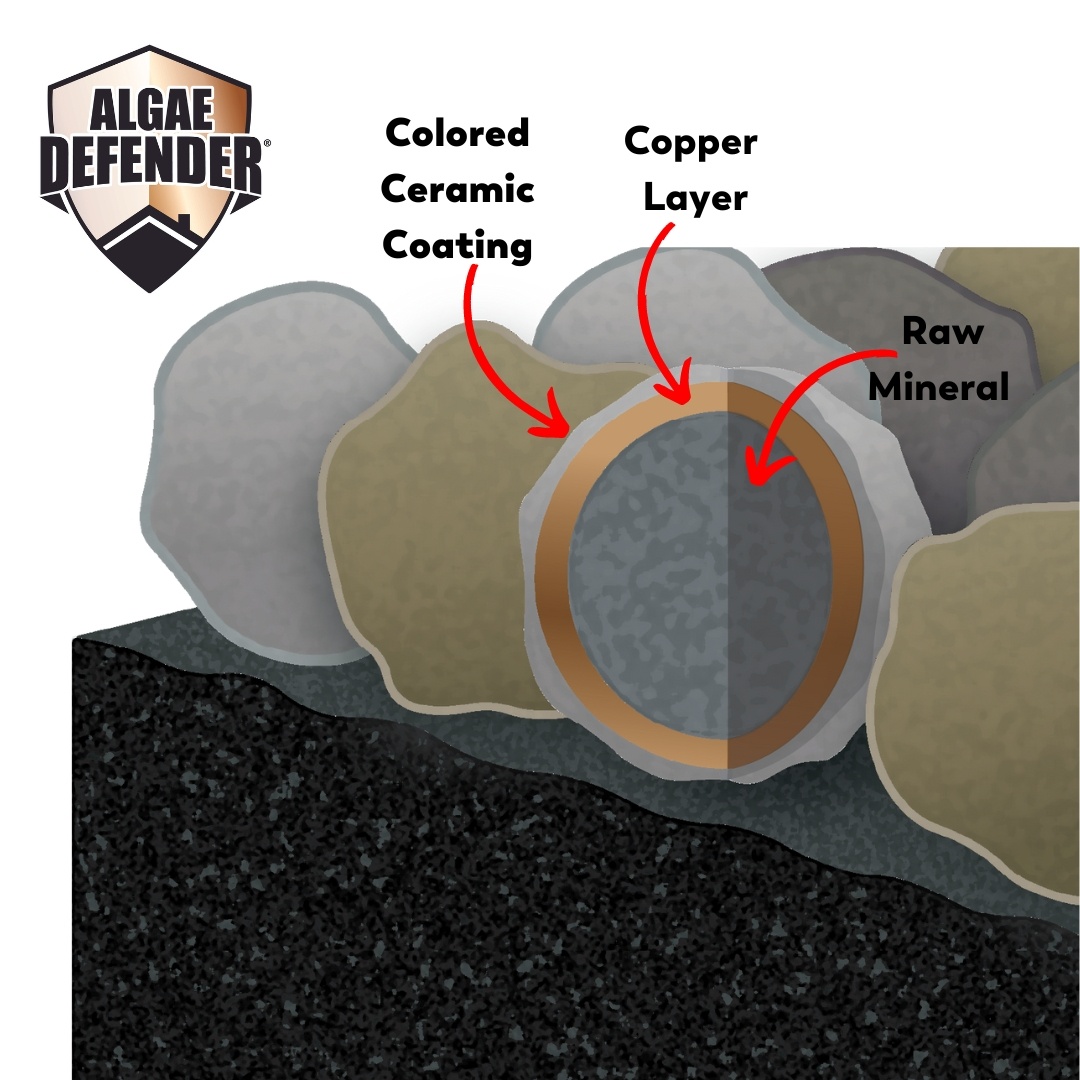
At a long-running test facility in Granite Falls, Washington, PABCO has tested shingles built with varying copper granule concentrations. After years of exposure, our testing facility has enabled us to develop our Algae Defender technology with an optimized copper granule blend engineered to resist blue-green algae for years under harsh, wet conditions.
Where most standard asphalt shingles utilize ceramic-coated granules, which provide both color and protection, algae-resistant shingles incorporate copper-infused granules, as copper is a natural algaecide. When the roof becomes wet, small amounts of copper ions are released from the granules and wash across the roof surface. These ions make it extremely difficult for cyanobacteria to establish, helping keep the shingles clean and streak-free.
Beyond appearance: Other reasons to choose algae-resistant shingles
Although algae is primarily an aesthetic problem, homeowners increasingly face secondary issues such as:
- Other growth becomes more likely: Moss, lichen and green algae often feed on the organic residue left behind by blue-green algae. When cyanobacteria fail to establish themselves, these organisms have a harder time gaining a foothold.
- Organic growth can affect roof performance over time: While the shingle itself isn’t a nutrient source, moss and lichen can trap moisture, redirect water flow and dislodge granules from the shingles as they root and spread.
- Insurance claims are becoming more common: More homeowners are being told by adjusters that their roofs appear worn out because the black streaking mimics granule loss or shingle deterioration. In many cases, the roof is still well within its service life, it’s just stained.
Choosing algae-resistant shingles can help homeowners avoid these unnecessary headaches and preserve the roof’s visual condition. PABCO backs this with warranty protections for Algae Defender products, offering cleaning, repair or replacement if cyanobacteria appear.
By educating your clients about blue-green algae and the benefits of Algae Defender shingles, you can help them make a choice that saves money, avoids frustration and keeps their home looking great for years to come.
Original article and image source: PABCO
Learn more about PABCO Roofing Products in their Coffee Shop Directory or visit www.pabcoroofing.com.
Recommended For You
Share this How-To with Your Customers So They Can Create their Own Gutter Garden
Read More ...
Enhance Your Deck's Appearance and Safety With DeckShield™
Read More ...
Cómo elegir la cubierta adecuada para un techo de baja pendiente
Read More ...
UP TO THE MINUTE


Comments
Leave a Reply
Have an account? Login to leave a comment!
Sign In