



FAQs of waterproofing part 1: Moisture management
By Emma Peterson.
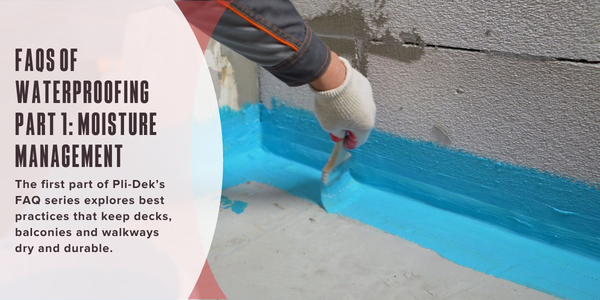
The first part of Pli-Dek’s FAQ series explores best practices that keep decks, balconies and walkways dry and durable.
For decades, Pli-Dek has produced some of the industry’s leading cementitious waterproofing solutions for everything from decks and balconies to walkways and plazas. Their products are not just trusted by professionals because of their high-quality formulation and performance, but also for the support the Pli-Dek team provides behind the scenes.
And as part of their support program, Pli-Dek has put together a collection of FAQs (frequently asked questions) that share advice and product recommendations for a variety of waterproofing situations. In the first part of these FAQs for waterproofing, the Pli-Dek team covers the basics of moisture management:
Why do deck-to-wall connections often leak?
Deck-to-wall transitions are exposed to building movement and concentrated water runoff. These areas require properly integrated flashing and waterproofing to prevent moisture from entering behind walls or beneath the deck surface.
How can contractors stop water from leaking through a balcony or elevated deck?
A properly installed waterproofing assembly creates a continuous barrier that helps prevent water from reaching the deck structure and occupied spaces below. Effective waterproofing must also address edges, walls, drains, railings and penetrations where leaks commonly begin.
Can waterproofing help prevent mold and moisture problems indoors?
Water intrusion from decks and balconies can contribute to damp building materials, staining and conditions that support mold growth. Preventing water from entering the building envelope is an important part of managing indoor moisture.
Can a waterproofing system help with standing water?
Waterproofing helps protect the deck surface, but it does not replace proper slope and drainage. Low areas, blocked drains and poor deck design should be corrected so water can move away from the building instead of collecting on the surface.
How can waterproofing help prevent structural damage?
When moisture reaches plywood, concrete or framing, it can lead to rot, corrosion, deterioration and costly repairs. A complete waterproofing system helps protect the underlying structure by limiting long-term water intrusion.
What can be done about water entering around railings and posts?
Railings and posts create penetrations that can become vulnerable leak points. Proper installation requires careful waterproofing and flashing around each attachment so water cannot move into the deck assembly.
Why does a deck keep leaking even after it has been repaired?
Recurring leaks often mean the repair addressed only the visible damage instead of the entire waterproofing assembly. Cracks, failed flashing, improper drainage or deteriorated transitions may allow water to continue moving beneath the surface.
Have more questions about using Pli-Dek products and systems to manage moisture on your next project? Contact them today! Want to read more of their FAQs for waterproofing? Keep an eye out for part two and three of this series!
Learn more about Pli-Dek in their Coffee Shop Directory or visit www.Pli-Dek.com.
About the author

Emma is the senior content developer at The Coffee Shops and AskARoofer™. When she's not working or overthinking everything a little bit, she enjoys watching movies with friends, attending concerts and trying to cook new recipes.
Recommended For You

Last call for IIBEC’s 2026 International Convention!
Read More ...
WRE 2026 fue el lugar para estar este año
Read More ...
Caution: Attic air can affect living space air
Read More ...
UP TO THE MINUTE






Comments
Leave a Reply
Have an account? Login to leave a comment!
Sign In