



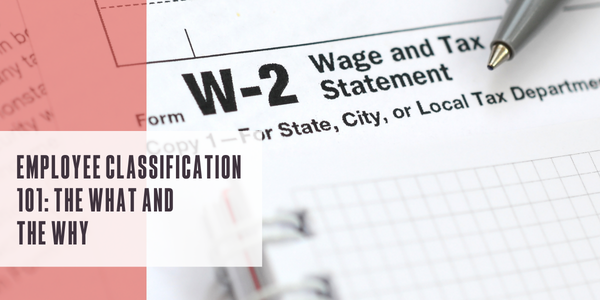
Employee classification 101: The what and the why
By Emma Peterson.
Benjamin Briggs breaks down the legal and operational implications of worker classification.
For many contractors, understanding employee classification can be one of the hardest parts of running a business. To give our readers some clarity on the topic, Karen Edwards hosted Benjamin Briggs, a board-certified labor and employment attorney with Adams and Reese law firm, for an episode of Roofing Road Trips®.
Why is employee classification so important?
Classifying your employees is a fundamental part of running a contracting business. Benjamin explained:
Employee classification is a very significant legal distinction because it affects a lot of things. It affects your taxes, because it changes the way declarations are done. It’s related to work authorizations because there are I-9 and e-verification requirements that apply to W-2 employees and not independents or subs. It also affects workers comp, because you might have a worker's comp policy that covers your employees but not independents, and it can even have impacts on licensing in some states.
Why does classification have an impact on such core parts of your business? Benjamin used licensing as an example, “Some states, like Florida, require the workers on the jobsite to either have their own professional license or be W-2 employees of a licensed contractor. So, in those states, if you don’t have people working as an employee, and they don’t have their own independent license, it’s not legal for them to be doing any work.”
What do mistakes look like?
Misclassifying someone isn’t an uncommon mistake in the roofing industry. As Benjamin put it, “A lot of people have a misunderstanding about how classification works. And it’s not just your crew that you could be misclassifying, you could misclassify your receptionist, your sales team, etc.”
One of the most common mistakes that Benjamin sees is that some believe classification doesn’t matter for part-timers. He explained, “I’ve seen people rely on the idea that if someone is working part time or seasonally, classification doesn’t matter. And that’s where a lot of people get in trouble.”
Want to learn how to avoid this type of issue? Make sure to look out for our next article on this topic, “Employee Classification 102: The who and how!” You can also Listen to Karen’s entire conversation with him or Watch a recording of it on YouTube.
Learn more about Adams & Reese LLP in their Coffee Shop Directory or visit www.adamsandreese.com.
The information contained in this article is for general educational information only. This information does not constitute legal advice, is not intended to constitute legal advice, nor should it be relied upon as legal advice for your specific factual pattern or situation.
Recommended For You

AI takes the stage at IIBEC 2025
Read More ...
How smarter field fabrication improves productivity and quality
Read More ...
S3:E1 Kathleen Ropka - Getting to Know the Cotney Chicago Office
Read More ...
UP TO THE MINUTE






Comments
Leave a Reply
Have an account? Login to leave a comment!
Sign In