



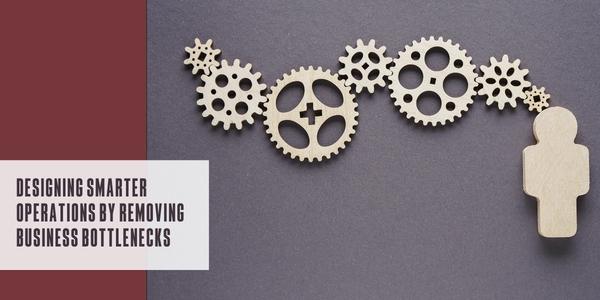
Designing smarter operations by removing business bottlenecks
By Jesse Sanchez.
Understanding how people, processes, data and technology work together helps companies build operations that support sustainable growth.
Operational efficiency begins with understanding how work is actually performed. In this episode of Operational Clarity, a podcast from The Coffee Shops™, Tyelus CEO Lynsey Hull explained how companies can uncover bottlenecks by examining people, processes, data and technology together.
What commonly slows organizations down?
Lynsey said some of the most persistent bottlenecks are created by processes that were intended to support compliance but were developed without enough input from the employees responsible for carrying them out.
“Really, one of the most common [bottlenecks] is the processes themselves. So it’s kind of a double-edged sword here. You have all these processes that are required to gain compliance. But once you put those processes in place, if you don’t talk to the people that actually perform the work that process is related to, you could be messing up their entire day.”
Employees performing the work often discover more efficient ways to complete it. Leaders should therefore gather management requirements, including compliance, safety and performance metrics, before speaking with employees about their daily responsibilities and challenges.
How can leaders identify better solutions?
Before recommending new tools or changing established workflows, Lynsey begins by understanding what leadership needs from the operation.
“We go in and we talk to management. And we say, OK, management, what do you need? What are your requirements? What are your compliance requirements? What are your safety requirements? Also, what metrics are you looking for? And what are you looking to gain from those metrics?”
That context allows leaders to connect company objectives with the people creating the information behind those objectives. Lynsey also recommended asking employees what problems they see and what their ideal tool would look like, noting that the answer is not always software.
Why should companies research tools before investing?
Lynsey cautioned companies against reacting too quickly to industry trends or investing in a solution before understanding the problem it is expected to solve.
“Take the time, do the research, because ultimately, you’re probably going to spend more money if you don’t. If you rush into the wrong solution and end up not using it, how much have you just wasted?”
He illustrated the value of long-term thinking with an example from a sheet metal shop, where purchasing fewer, higher-quality drill bits produced better results than repeatedly buying inexpensive ones.
Smarter operations are not created by adding technology as quickly as possible. They are built by understanding the need, listening to employees and selecting durable tools that support the organization’s larger goals.
Listen to the entire podcast or Watch the conversation to learn more about identifying and removing operational bottlenecks.
Learn more about Tyelus in their Coffee Shop Directory or visit tyelus.com.
About the author

Jesse is a writer for The Coffee Shops. When he is not writing and learning about the roofing industry, he can be found powerlifting, playing saxophone or reading a good book.
Recommended For You

Re-roofing starts with what is already there
Read More ...
Mishell Cox: Most Influential Women in Indiana
Read More ...
New Tools and APIs to Streamline Your Operations
Read More ...
UP TO THE MINUTE




Comments
Leave a Reply
Have an account? Login to leave a comment!
Sign In