



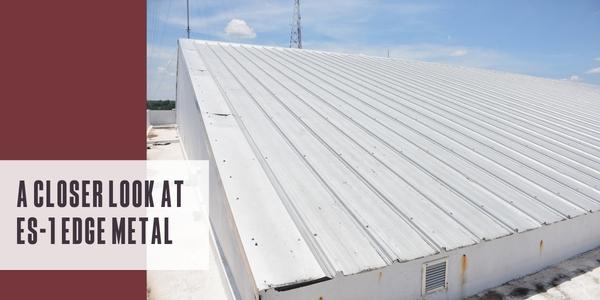
A closer look at ES-1 edge metal
By Jesse Sanchez.
Understanding ES-1 compliance can help contractors protect commercial roof perimeters from wind, water, and installation issues.
Edge metal plays a visible role in the finished look of a commercial roof, but as FlashCo explains, the most important work happens at the perimeter. The perimeter is where commercial roofs most commonly fail, making properly installed edge metal systems critical to resisting weather-related forces, especially wind. The ANSI/SPRI/FM 4435/ES-1 standard, commonly referred to as ES-1, is part of the International Building Code (IBC). While many roofing professionals are aware of the standard, some confusion remains regarding its application and who is responsible for compliance.
One common misconception is that ES-1 only matters in high-wind areas. Although ES-1 compliant edge metal is especially important where wind exposure is a concern, the standard applies to building projects under the IBC and is often included in local building codes. Manufacturers test edge metal profiles to determine their capacity to resist applied loads, producing a pounds-per-square-foot rating that helps specifiers match a profile to a building’s requirements.
For contractors, compliance comes down to two essential steps: selecting an edge metal size within the manufacturer’s tested parameters and installing it exactly according to the manufacturer’s instructions. Those instructions replicate the profile that was tested, which makes field installation a central part of meeting the standard.
Another misconception is that edge metal is mainly about preventing water damage. Edge metal does help seal the roof perimeter and protect fascia from leaks that can lead to rot, mold, and structural damage, but wind remains the most common cause of perimeter failure. ES-1 compliant edge metal is designed to help protect against both water and wind damage.
There is also confusion around cleats. Some ES-1 compliant profiles do not require a cleat, though they may require face fasteners. When visible fasteners are a concern, a cleat can provide a cleaner appearance. The choice is often aesthetic rather than functional, as compliance depends on the tested profile, size, and installation.
Architects and specifiers can help identify compliant profiles, but contractors are central to achieving compliance in the field. ES-1 compliant edge metal is not necessarily more expensive than noncompliant options, depending on the manufacturer, and proper installation can help avoid costly blow-offs and roof damage.
Learn more about FlashCo in their Coffee Shop Directory or visit www.flashco.com.
About the author

Jesse is a writer for The Coffee Shops. When he is not writing and learning about the roofing industry, he can be found powerlifting, playing saxophone or reading a good book.
Recommended For You
Grocery store gets a new look
Read More ...
GAF announces new nationwide availability of Timberline UHDZ® Shingles with UltraMat™ technology, delivering premium beauty and UL 2218 Class 4 impact resistance
Read More ...
More than materials
Read More ...
UP TO THE MINUTE




Comments
Leave a Reply
Have an account? Login to leave a comment!
Sign In